
When To Use Hot or Cold Therapy For Your Injury
Posted by Refisio Health on 4th Nov 2016
Quite often we come across articles written about applying heat and cold therapy for injury treatment when we develop sport injuries.
But which one we should use? The answer depends on whether the pain is new or recurring.
Different types of injuries require different treatments, knowing when to correctly use each one can speed up injury recovery.
Acute Injuries
Acute injuries are ‘new’ pain. It’s usually caused by trauma, accident such as injury caused by unintentional twisting movement, a strong and hard blow to the body. In general, a new injury will cause inflammation and may be swelling as well.
Some common signs of acute injuries include:
- Sudden severe pain and inability to continue activity
- Swelling that begins within a few hours
- A feeling of instability with weight bearing
- Loss of range of motion
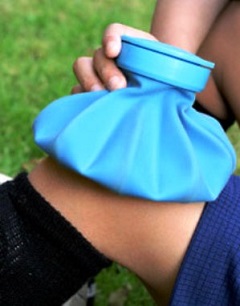
When acute injury first develop, your first priority is to control bleeding, swelling, inflammation and pain, Apply cold therapy to the injury as soon as possible for no more than 20 minutes each time. Then reapply it every two to three hours for the next 24 - 48 hours.
This process will slow down the cell metabolic rate, reduces blood flow and fluid being supplied to the injury site, thereby reduce inflammation and swelling, and numbs the pain. Do not apply it for longer than 20 minutes. Always wrap ice gel pack or ice packs in a protective cloth before applying it.
After the acute stage passed and have no sign of inflammation, you can then alternate between cold and heat therapies. Apply cold for 15 minutes, and immediately follow with 15 minutes of heat treatment. This will open up surrounding blood vessels, increases blood flow, oxygen supplies and nutrients to repair the damaged tissues.
Chronic Injuries
Chronic injuries do not appear suddenly, they are recurring and built up over a certain period. They are mostly caused by the overused of muscle or degeneration of joint cartilages and tendons.
Some chronic injuries are caused by an acute injury that has failed to heal due to lack of proper treatment. Chronic pain that recurs can be treated with heat therapy.
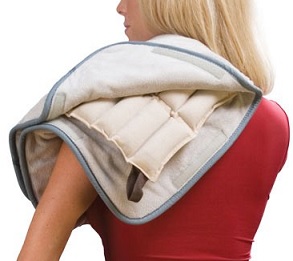
Heat therapy promotes blood flow, increases oxygen supply and nutrients to the injury site. The warmth also relaxes sore muscles, ligament and tendons, thereby increases range of motion.
They are two sources of heat – dry and moist heat. Moist heat does not draw moisture out of your skin, and it provides a greater level of pain relief. Dry heat sources may dry your skin. Heat can be applied by hot water bottle, heated gel packs, microwavable heating pads or hot water baths. The heat should be warm and maintained at a consistent temperature.
Apply heat therapy to the injured site for 10 – 20 minutes. Place a layer of protection cloth between your skin and the heat source to prevent it from being burned.
Do not apply heat for more than 20 minutes unless recommended by a doctor or physical therapist. Do not use heat therapy on open wound or stitches. Only apply heat treatment after an injury site has no sign of swelling.
Besides, heat therapy is recommended prior to exercise to warm up the muscles and increase flexibility of tendon and ligament, this is especially good for rheumatoid arthritis patient who suffers stiff joints, chronic muscle and joint pain. If chronic injury patient experience swelling after finished exercising, maybe they should consider using cold therapy to reduce the swelling.
Cryotherapy for Post Operative Treatment
It is common for orthopaedic surgeons to use cryotherapy devices such as Aircast Cryo Cuff to treat and
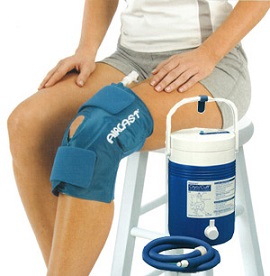 manage
orthopaedic conditions following surgery, such as ACL (anterior cruciate ligament) reconstruction, Arthroscopy and meniscectomy.
manage
orthopaedic conditions following surgery, such as ACL (anterior cruciate ligament) reconstruction, Arthroscopy and meniscectomy.
These devices can provide compression and circulating ice and cold water therapy for 6 - 8 hours, much longer ice therapy compares to standard ice gel packs. A study confirmed cryotherapy treatment is effective in decreasing post operative pain. It is advisable to use cryotherapy devices under supervision of your doctor or physical therapist.
Consult your doctor or physical therapist if you are still not sure which treatment method is suitable for your condition.
The information above is general in nature and is only intended to provide a summary of the subject matter covered. It is not a substitute for medical advice and you should always consult a trained professional practising in the area of sports medicine in relation to any injury. You use or rely on the information above at your own risk and no party involved in the production of this resource accepts any responsibility for the information contained within it or your use of that information.