
Achilles Tendonitis Injuries & Treatment
Posted by Refisio Health on 21st Oct 2016
The tendon is a flexible but inelastic band of tissue that connects muscles to the bone. The Achilles tendon is the largest and strongest tendon in our body that connects the calf muscles to the heel bone that helps us to push off when walking, running or jumping and it is easily subjected to wear and tear.
Achilles tendonitis (or tendinitis) refers to the inflammation of the Achilles tendon or its covering. It is an overuse injury due to repetitive action or activity, such as jogging and running, and it is common to athletes.
Achilles tendinosis is the weakening and degenerative of tendon fibre that involved a series of tiny-tears over time.
Nowadays expert uses the term Achilles Tendinopathy to include both inflammation and
micro-tears of the tendon fibre.

What Causes Achilles Tendon ?
Some common causes that have contributed to the tendon inflammation and micro-tears of tendon fibre are:
- Inadequate/ lack of warm up, stretching and cool down exercises.
- Sudden increase in the intensity and duration of activity.
- Sudden change of training surface, from soft (grass) to concrete ground or running on hard or uneven surfaces.
- Wearing poorly supportive footwear.
- High arched foot with tight Achilles tendon – lacks the flexibility to absorb shock and it tends to roll outward causing ankle sprain and Achilles tendon injuries.
- Flat feet - the flattened arch pulls on the calf muscles and keeps the Achilles tendon under tight strain.
- Poor muscle flexibility (e.g. tight calf muscles, tight hamstring).
- Decreased joint range of motion, e.g. stiff ankle joint
- Constantly toe walking or wearing high heels
- Insufficient in recovery time between activities
Achilles Tendonitis Symptoms
- When the tendon tears or ruptures, a patient generally feels a "pop" and can't stand on his or her toes
- Mild to severe pain, stiffness, and loss of strength in the Achilles tendon area.
- The affected area may be tender, red, warm, or swollen if there is inflammation.
- You may experience more pain and stiffness during the night or in the morning. Stiffness may diminish as the tendon ‘warms up’.
Achilles Tendonitis Treatment
Immediate management to reduce bleeding, swelling and damages in the injured area are crucial. Apply RICE (rest, ice, compression, elevation) and No HARM (no heat, no alcohol, no running or activity, and no massage) protocols within the first 48 – 72 hours after injury.
Rest – depends on the severity of your injury, your doctor or physical therapist may recommend you to take partial or full rest to enable healing of the injured Achilles tendon. Achilles tendonitis often recurs if a patient return to sport too soon or before the completion of the rehabilitation programme.
Proper footwear – wear comfortable and supportive shoes and insoles, this is particularly important to the athletes.
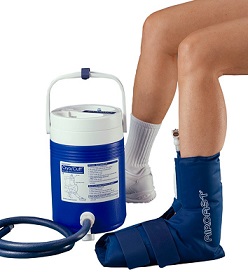
Cold therapy – ice massage or cold compression helps to reduce pain and inflammation in the Achilles tendon. Use ankle cryo/cuff ice treatment for 10 – 20 minutes following activity.
Bracing and orthotic devices such as heel cups and Aircast Airheel Ankle Brace can be worn during the day to stabilise the heel, minimise stress-load, thus reduces heel pain.

Night splints - AirCast Dorsal Night Splint or Strassburg Sock provides prolonged stretch to the Achilles tendon while you asleep. Getting a Aircast Airheel Plantar Fasciitis Achilles Tendonitis Kit is a cost effective option as it contains AirCast AirHeel Ankle Brace & AirCast Dorsal Night Splint that provide daytime and night time support to your injured Achilles tendon.
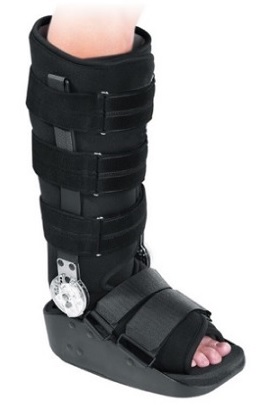
Motion Control (MC) Walker – Donjoy MC Walker is designed to be used
following Achilles tendon rupture/ repair surgery. It allows adjustable range
of ankle motion during the healing process, the surgeon can change the angle of
the ankle joint and gradually put more stretch on the healing of the Achilles
tendon.
Achilles strapping/ taping – it reduces the pressure on the Achilles tendon by taking some of the load. It will also help prevent the Achilles tendon from over stretching. Spidertech kinesiology tape and Rock tape can be used for Achilles tendon strapping / taping.
Seek help from a sport medicine professional and physical therapist to provide required treatment that helps to reduce pain and improve the body’s ability to heal.
Early treatment will minimize downtime and potential complications. Surgery is best suited for repair of an acute or chronic Achilles tendon rupture.
Prevention
- Warming up, stretching and cooling down before and after workout or training sessions.
- Allowing adequate recovery time between workouts or training sessions.
- Wearing supportive and good impact absorption shoes for the activity.
- Strapping and taping of the Achilles tendon helps to prevent it from being over stretched.
- Regular strengthening and stretching exercises help to maintain muscle strength and flexibility.
- Gradually increasing the intensity and duration of training.
- Avoid activities that put excessive stress and causing pain in the Achilles tendon.
The information above is general in nature and is only intended to provide a summary of the subject matter covered. It is not a substitute for medical advice and you should always consult a trained professional practising in the area of sports medicine in relation to any injury. You use or rely on the information above at your own risk and no party involved in the production of this resource accepts any responsibility for the information contained within it or your use of that information