
How To Choose The Right Tape For Strapping And Taping?
Posted by Refisio Health on 18th Dec 2016
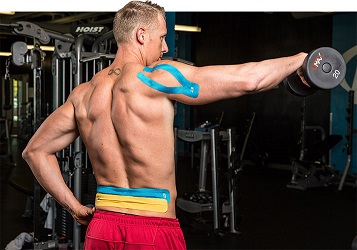 You suffer an injury, but have no
plan to give up participating in your favourite sport or training sessions. So
you count on sport taping to keep you going. After all, the aim of strapping/ taping is to provide support and prevent injury, allowing desired movements at a joint. It also helps to limit pain and reduce severity of the injury by limiting specific movement at a joint.
You suffer an injury, but have no
plan to give up participating in your favourite sport or training sessions. So
you count on sport taping to keep you going. After all, the aim of strapping/ taping is to provide support and prevent injury, allowing desired movements at a joint. It also helps to limit pain and reduce severity of the injury by limiting specific movement at a joint.
What taping do you use that work best for your injury? Which taping will protect you from further damage to an existing injury?
Here is a general guide attempts to demystify the various types of tapes being used for various injuries. Consult a physiotherapist or healthcare practitioner if you are unsure about the injury you have.
Sport strapping/ taping should be used by trained experts, such as physiotherapist and sports medicine professional as they understand the correct taping and strapping to the relevant injury. Applying the wrong strapping or taping may cause permanent damage to a complicated injury.
SPORT TAPES
Here are some of the sports tapes commonly used for sports strapping and taping, choose the right tape for the job.
1) Zinc Oxide Tape (Inelastic/ Rigid Tapes) - a rigid cotton or rayon rape that uses Zinc Oxide adhesive. It is used to strap the joints such as wrist, knee, ankle and shoulder to prevent sports injuries.
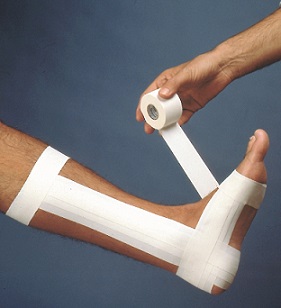
It can also be used to support and protect muscles around the weakened joints or previously injured areas. This inelastic tape helps to restrict joint movement that maybe causing pain during activity.
Benefits of using Zinc Oxide tape are it is easily conform to the area being applied, less bulky and lighter weight compares to brace. It offers targeted support to specific ligaments or tendons within a joint.The tape stayed in place for longer periods of time, ideal for holding overstretched ligaments in place.
Zinc Oxide Tape is typically used in twists and turns, sprains or in hard tissue injuries
These tapes available in different stickiness and strength to meet your need. Three main things to consider when purchasing Zinc Oxide tape are:
- Quality of the adhesive – a good
level of adhesion might be suitable for single, short term use. Generally, the more you pay, the better the adhesion quality.
- Tensile strength of the tape –
premium quality offers good tensile strength that can withstand high level of
stress before breaking.
- Comfort of the tape – a smooth unwind tape allows for conformity and easier application to the body.
Try : Donjoy Zinc Oxide Tape Premium Rigid Sport Tape
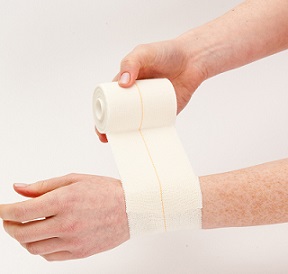
2) Elastic Adhesive Bandages (EAB) – a strong cotton tape with certain amount of ‘flex’ along its length. It provides less support compares to Zinc Oxide tape. It does offer strong adhesive and compression. Commonly used when strong support and compression is needed.
Try : Elastoband Sport Elastic Adhesive Bandage
3) Tearble EAB – it is lighter than normal EAB and it is hand tearable, making it easier and quicker to use at the pitch side.
4) Kinesiology Tape – a formulated, super-thin and elastic therapeutic tape with adhesive in a wave pattern. When the tape is stretched, the adhesive wave causes a ‘lift’ in the skin layers. The ‘lifting’ effect increases blood circulation, reduce muscle fatigue, promote the healing process and prevent injuries.
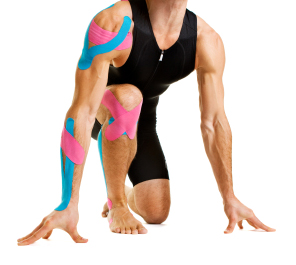
Commonly applied by athletes to treat and prevent injury. It can be used before, during and after activities. Usually the tape stays on for 3 – 5 days after applying. You can get the pre-cut Kinesiology Tape here.
Try : Pre-cut Spidertech Kinesiology Sport Tape for Arch & Calf
Try : SpiderTech Kinesiology Tape 5cm x 5M
PRE - TAPING
1) Underwrap - It is advisable to use underwrap if skin allergies, apply it under the tape to prevent the tape sticking to the hairs on your skin, easier and less painful to remove the tape after the match.
Try : Sport Tape Underwrap Foam Roll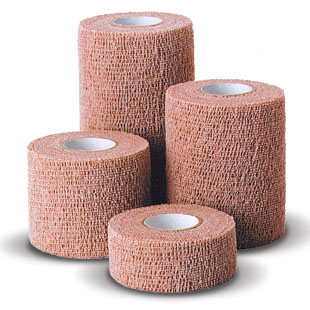
2) Cohesive bandage – It sticks to itself instead of to the skin. Ideal for patient with allergies to tape adhesive. Commonly used as a pre-sports wrap to support the ankle, knee, shoulder, elbow and wrist.
It provides compression to limit joint swelling and bleeding following sports injury, e.g. sprained ankle or knee ligament injury. Early application of compression bandage can help to accelerate healing and rehabilitation.
It can also be used as a supportive underwrap. Available in different widths.
Try : Dema Wrap Self Adherent Cohesive Bandage
MEDICAL TAPE
1) Tubular bandage - a soft and flexible, skin-friendly liner for plaster of synthetic casts. Made of cotton and it is a bit stretchy makes it easier to conform and comfortable to wear.
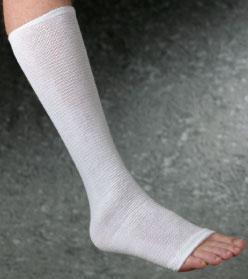
Try : Tubigrip Elastic Tubular Bandage
Try : Tubifast 2-Way Stretch Bandage
2) Athletic tear tapes – a stretchy tape which is ideal for minor support, securing lateral knee braces, as a compression wrap and securing dressings.
3) Surgical tape – commonly used to hold dressings in place such as a non adherent dressing over a deep cut.
4) Crepe bandage – from cotton or cotton mix materials. It offers minor support to injury, can be a good compression bandage when resting. It can also be used to strap onto an icebag.
Try : BSN TensoCrepe Heavy Weight Bandage
FINAL THOUGHT
Taping area should be clean and dry, no lotion or cream being applied. Where possible apply the tape directly on the skin for maximum support. Use foam underwrap or hypo-allergy underwrap if you have skin allergy.
It is important to know that strapping/ taping a joint is not a replacement for progressive rehabilitation and strengthening exercises for your injury.
The information above is general in nature and is only intended to provide a summary of the subject matter covered. It is not a substitute for medical advice and you should always consult a trained professional practising in the area of sports medicine in relation to any injury. You use or rely on the information above at your own risk and no party involved in the production of this resource accepts any responsibility for the information contained within it or your use of that information.