
Meniscus Tear : Treatment & Knee Brace Support
Posted by Refisio Health on 22nd Oct 2016
Meniscus tear is one of the common sport injuries. It can easily cause when the upper leg is bent or forcefully twisted while the foot stays planted. It happens when the player took a sudden turn or halted abruptly during activities. In addition, repeated or prolonged squatting can also contribute to meniscus tear. For older adult, the tear may be due to degeneration of the meniscus.
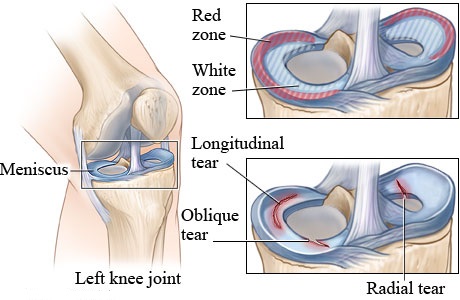
Meniscus tear has often been referred to cartilage
damage. The meniscus (plural) are “C’
shaped discs made of tough cartilage. They are two menisci (singular) within each knee joint – the medial meniscus
and the lateral meniscus. Both menisci are located on the top surface of the tibia.
They stabilize the knees during movement, acting as the shock absorbers between
the femur and tibia bones.
The ‘location’ of meniscus tear affects its healing time. A tear at the red zone (outer edge) tends to heal well because of good blood supply. A tear at the white zone (inner area) does not heal well compares to red zone due to lack of good blood supply.
Meniscus tear is classified as being total and partial
tear. A total tear happened when a piece of the tissue is completely separated
from the rest of the meniscus. This is a
rather severe injury that may require surgery and a long rehabilitation period
As for the partial tear, it still has part of the tissue attached to the body of the meniscus. This partial tear injury may require keyhole surgery to fix it.
The two common meniscal tear patterns are longitudinal (or vertical) and Oblique (or flap).
Here are a few items meniscus tear patients may encounter along the road to recovery, regardless whether they have a total or partial tear.
Knee Ice Therapy
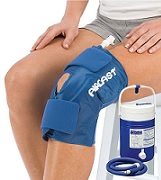
To minimize the initial pain and swelling at the early stage of the injury or following surgery, the patient can apply ice therapy. Compare to a simple ice pack, Aircast Knee Cryo/ Cuff is a better option as it can circulate cold water and apply controlled compression for 6 - 8 hours uninterrupted treatment.
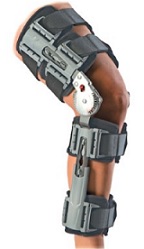
Post-Op Knee Brace
Following an operation on the cartilage, patient may require a sturdy post-op knee brace.The Donjoy X-Act ROM Post-Op Knee Brace is designed to aid recovery following cartilage repair as well as a variety of other procedures including ACL reconstruction and patella realignment. It can be extended at various angles to allow for a range of movements to provide supportive and comfortable fit.
Hinged Knee Brace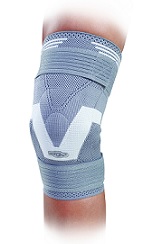
Donjoy Aliqua Elastic Hinged Knee Brace is designed for the treatment of meniscal injuries and post-operative support after meniscectomy as it can actively help the recovery process. This knee brace features. The removable upper and lower strapping of the knee brace secure the support in position, and the silicone buttress improves patella stability.
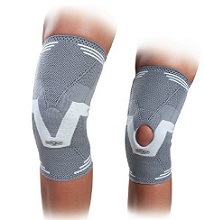
Knee Sleeve Support
Donjoy Rotulax Elastic Knitted Knee Brace come with built in, flexible bilateral stays that can help to improve stability following cartilage injury. It can be beneficial for patient who wants additional support during activities such as walking and running.
Rotulax Elastic Knee Brace is made from a multi-directional soft, latex-free elastic fabric, the close knit material fit snugly around the contour of your knee to provide maximum support. The silicone patella buttress provides added stability, creates a massage effect to the knee muscles, thus enhance blood circulation.
Rehab Exercises
When the patient can comfortably bear weight through the affected knee, the physiotherapy rehabilitation should focus on early mobilisation of the knee and kneecap joints, plus strengthening your
 hamstrings, leg muscles and
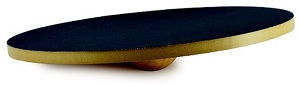
quadriceps will aid in recovery. Using a wobble board will help patient
to achieve this, it is designed as an aid to help you regain your balance and
restoring your stability following knee injury. It helps to improve joint
motion. The regular use of a wobble
board for balancing exercises on the affected leg will greatly enhance your recovery from
injury.
hamstrings, leg muscles and
quadriceps will aid in recovery. Using a wobble board will help patient
to achieve this, it is designed as an aid to help you regain your balance and
restoring your stability following knee injury. It helps to improve joint
motion. The regular use of a wobble
board for balancing exercises on the affected leg will greatly enhance your recovery from
injury.
The information above is general in nature and is only intended to provide a summary of the subject matter covered. It is not a substitute for medical advice and you should always consult a trained professional practising in the area of sports medicine in relation to any injury. You use or rely on the information above at your own risk and no party involved in the production of this resource accepts any responsibility for the information contained within it or your use of that information